
As workplace design continues to evolve, one principle continues to stand out biophilic design—the integration of natural elements into the built environment to support well-being, productivity, and the overall workplace experience.
In today’s office environments, biophilic strategies are not just aesthetic. They’re a meaningful part of how spaces function and perform. From material choices to spatial planning, these elements help create workplaces that feel more connected, comfortable, and human-centered.
Here are four key ways biophilic design is shaping the modern workplace:
1. Natural Light + Views
Access to daylight is one of the most impactful design elements in any workspace. Maximizing natural light and creating clear sightlines to the outdoors can improve mood, energy levels, and focus throughout the day.
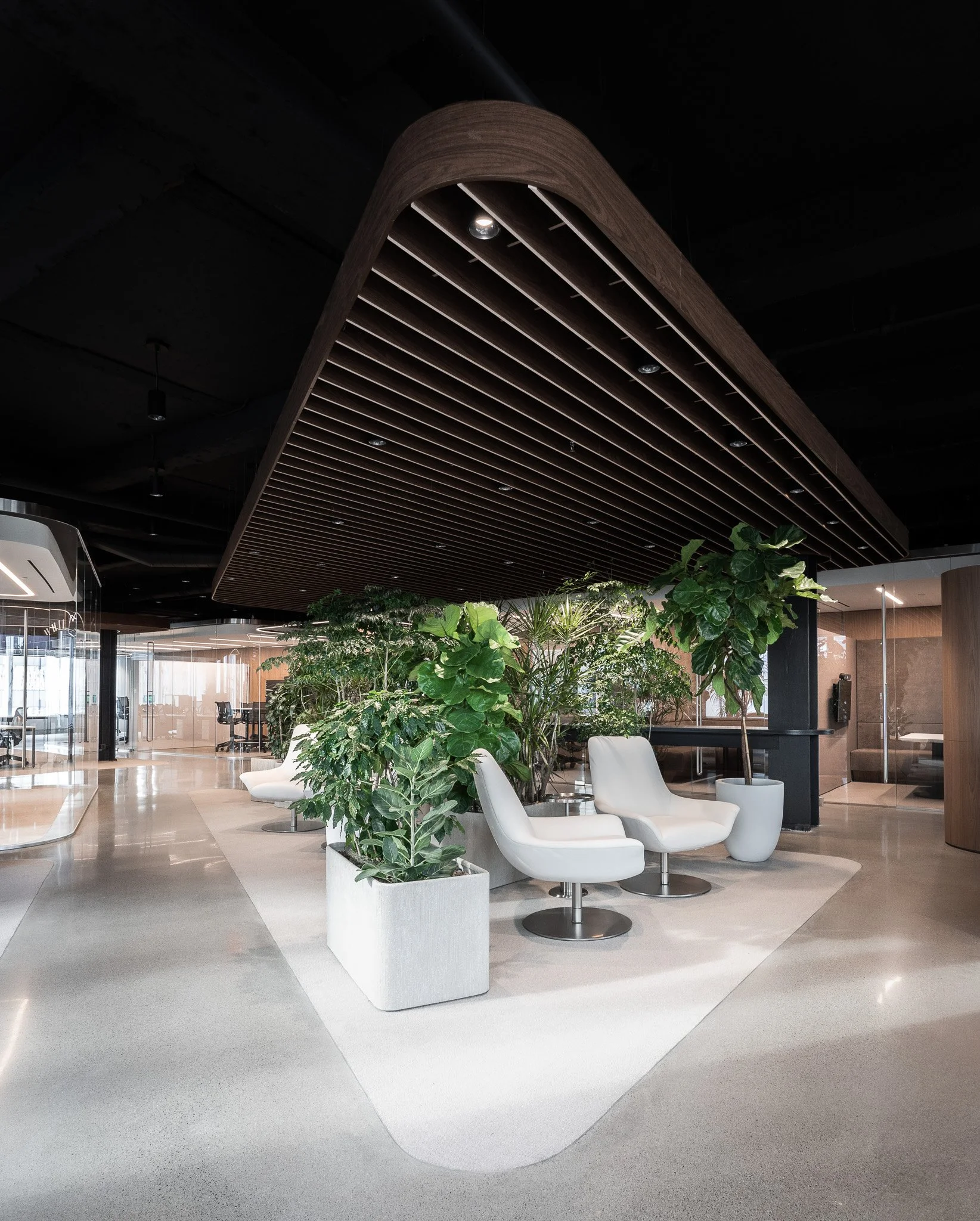
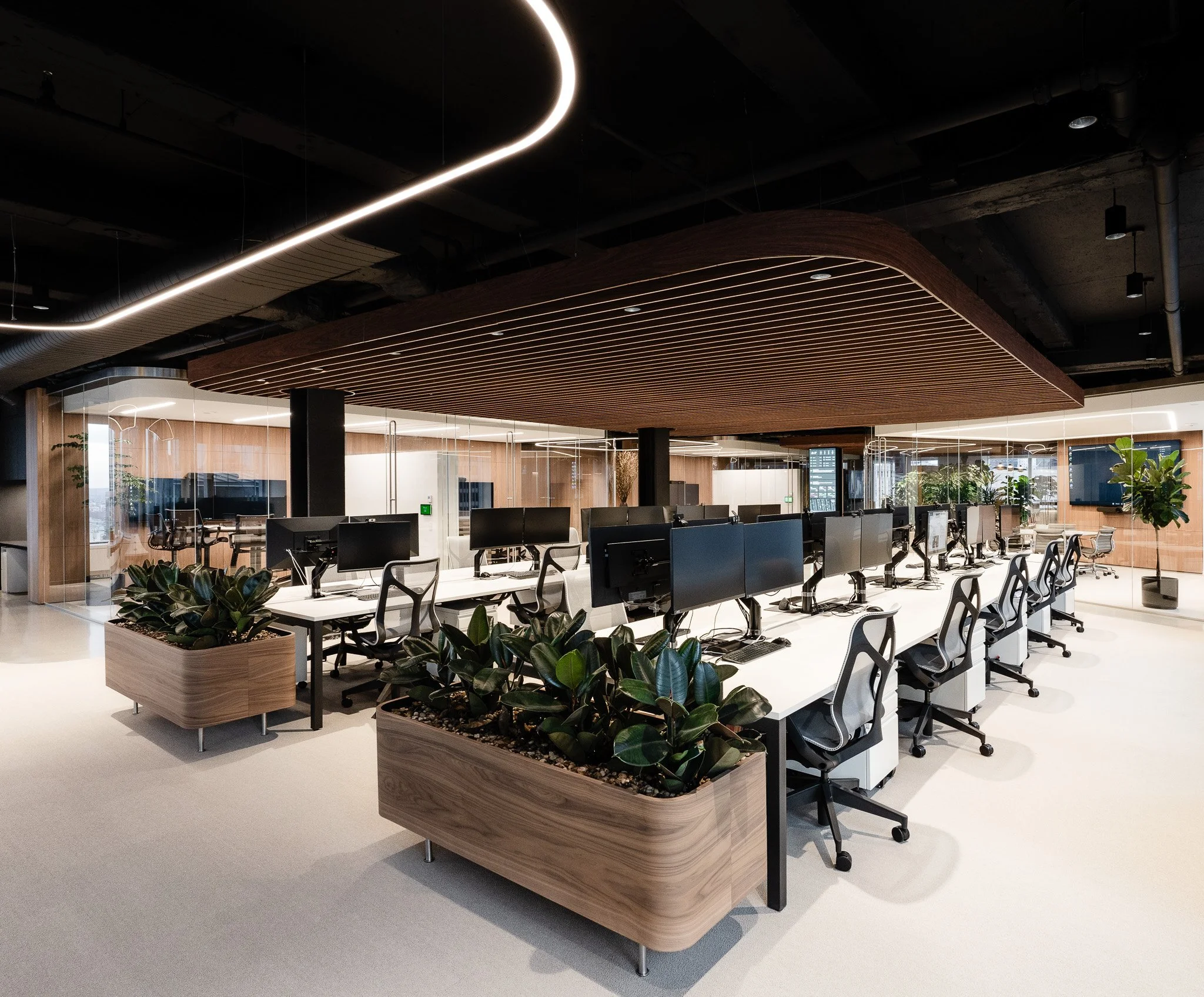
In collaboration with Maverick Real Estate Partners and AE Superlab, we helped deliver a workplace that embraces biophilic design through the creation of a dedicated “Garden Zone.” Designed for informal meetings, focused work, or quiet breaks, the space brings a sense of calm to the office. Lush plantings, natural light, and open sightlines add warmth and texture while creating a stronger connection to nature throughout the workplace.
2. Living Elements + Greenery
Incorporating plants—whether through feature walls, potted greenery, or integrated landscaping—adds a dynamic, organic layer to the workplace. These elements can improve air quality while creating a more inviting and balanced environment.
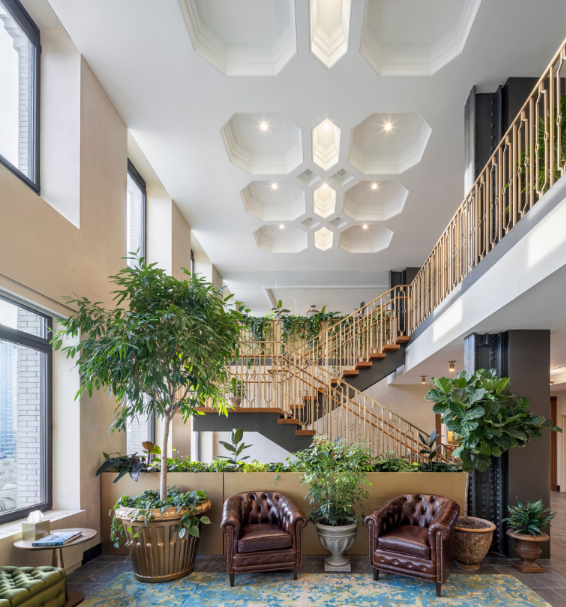
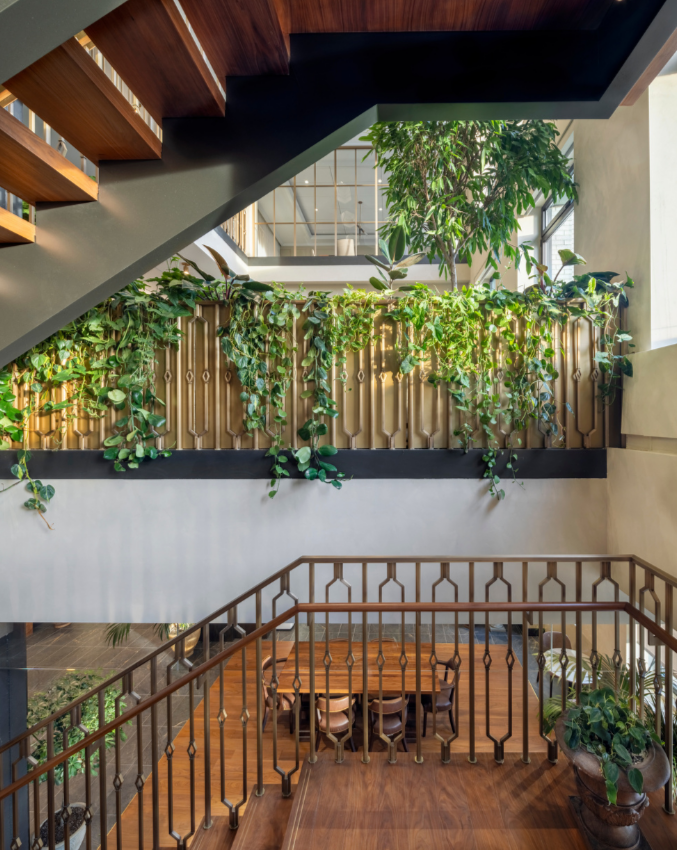
We worked alongside Beyer, Blinder, Belle and Greenery NYC in Tower Research Capital’s office renovation. The design pairs preserved landmark details with lush greenery to create a striking contrast throughout the space. Custom bookshelves with built-in irrigation support a variety of plant species while maintaining functionality.
3. Natural Materials + Textures
Materials like wood, stone, and organic textiles bring warmth and authenticity into a space. When thoughtfully integrated, they help soften more industrial elements and create a tactile connection to nature.
4. Outdoor + Indoor Connectivity
Terraces, balconies, and transitional spaces extend the workplace beyond its interior footprint. These areas provide opportunities for fresh air, informal collaboration, and moments of reset throughout the day.
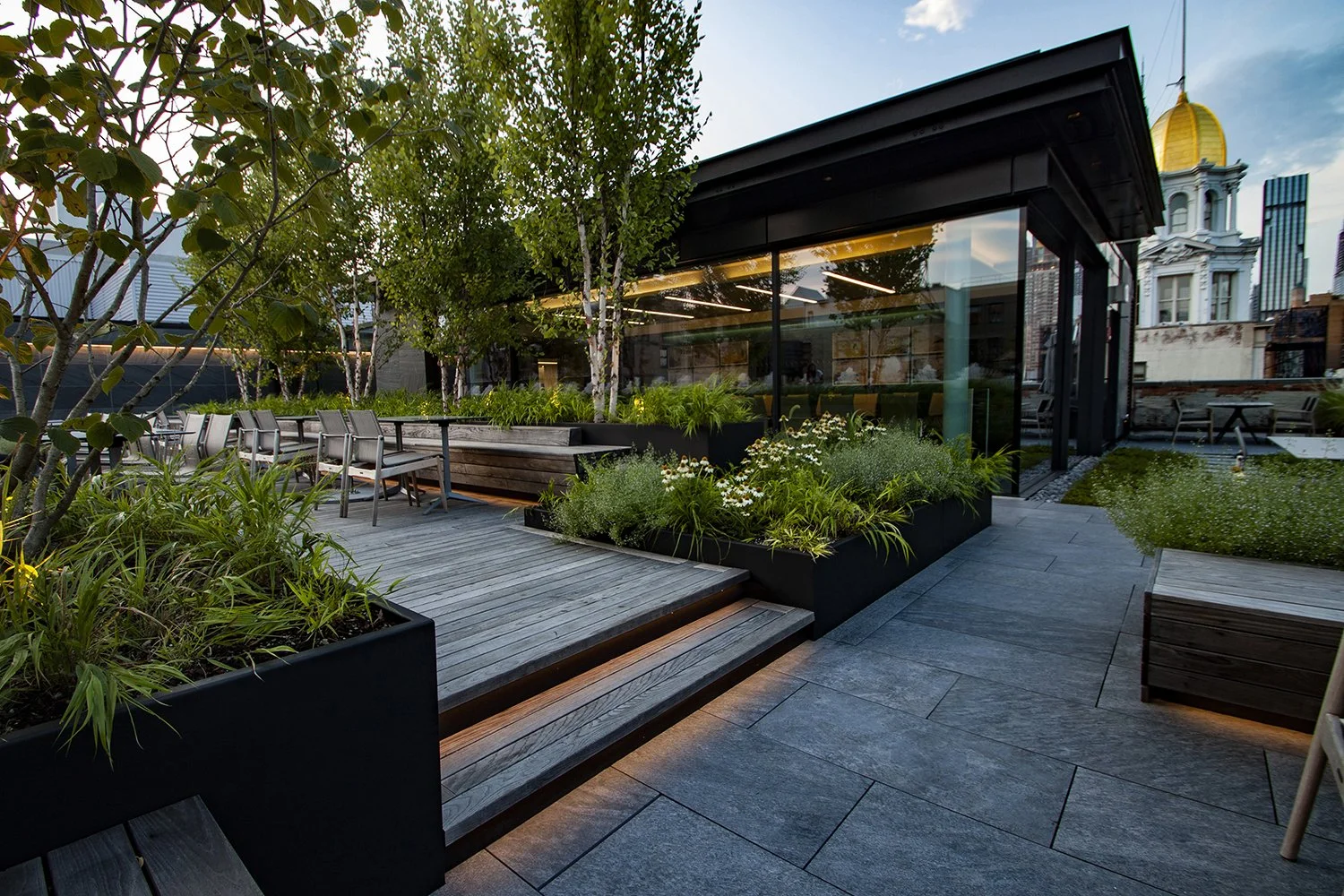
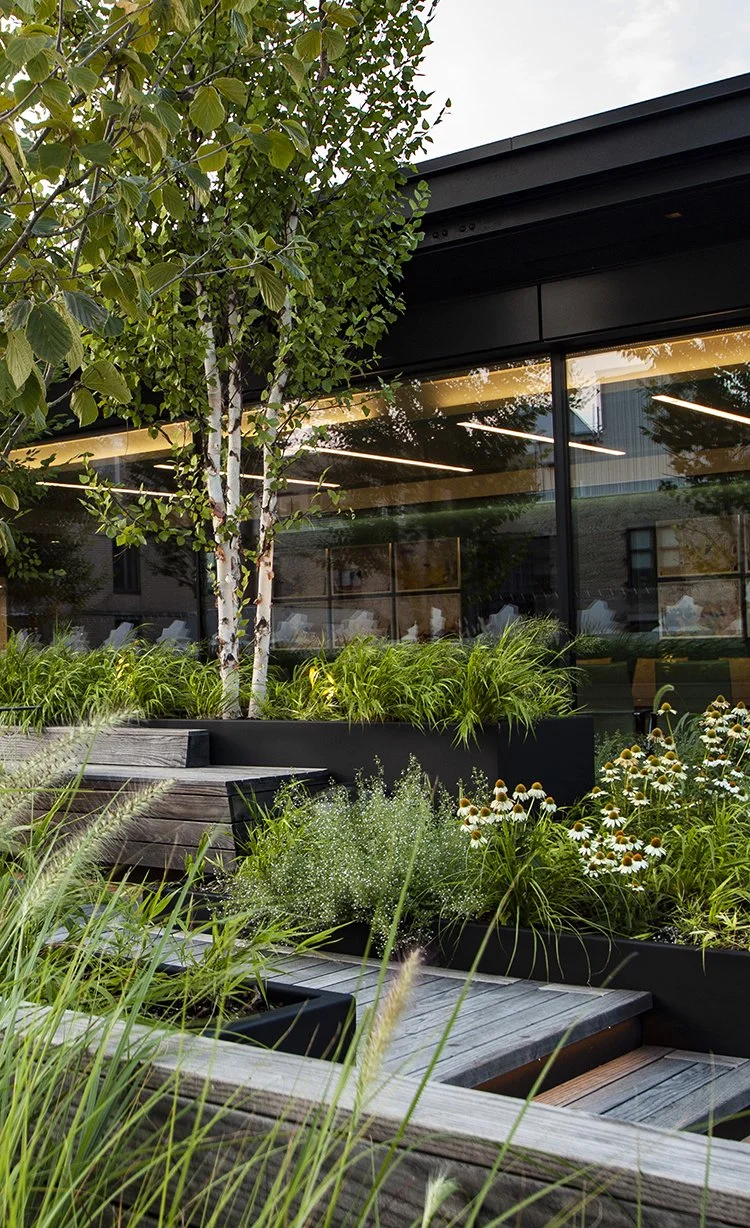
At the Flatiron Institute rooftop, in partnership with Perkins Eastman, Dirtworks Landscaping, and Blondie’s Treehouse, thoughtful design and construction came together to create a workplace that seamlessly connects people with nature through outdoor learning spaces. From sustainable green roof systems to seasonally rich landscaping, the project highlights how biophilic design can enhance wellness, collaboration, and everyday workplace experience.
A More Connected Workplace
Biophilic design isn’t about adding greenery as an afterthought—it’s about creating environments that support how people work and feel every day.
At L&K, we work closely with clients and design teams to bring these elements to life, delivering spaces that balance performance, wellness, and design intent.